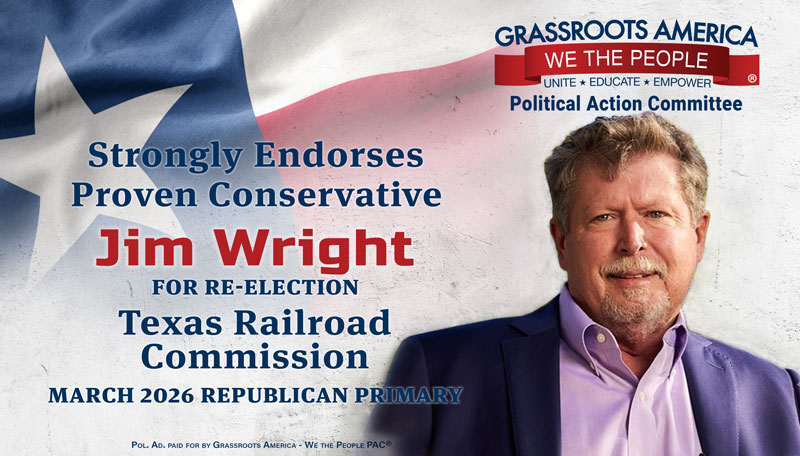
Summary of Campaign‑Related Accusations Against Jim Wright
1. Claims about donating to Democrats
Political opponents and commentators highlight that Jim Wright made political donations to Democratic candidates, framing this as evidence that he is insufficiently aligned with Republican voters. Truth is – you would be surprised at the number of high-flying Republicans who do the same AND who fund big anti-taxpayer bond elections around the state (violating the Republican Party of Texas Platform). If this a measuring stick for Wright – it should be a standard for all. Should that include President Trump? We think NOT! See what Trump has to say about his record of giving to Democrats.
Wright’s contributions from 2009 – 2015 redate his 2020 election to the Texas Railroad Commission. We find no contributions since 2015 – ten years ago. Wright says his past contributions were never about party loyalty; they were about “protecting the oil and gas industry and supporting people I trusted. President Trump did the same thing for years. When you’re in business, you work with whoever is in power to protect jobs, keep regulations reasonable, and make sure American energy stays strong. That’s not political — that’s practical.”
2. Criticism over conflicts of interest
Opponents use Wright’s business ties to oil‑field waste companies as a campaign issue, suggesting he is too close to the industry he regulates. In fact, Wright recently recused himself from a vote involving Eagleford Recycling LLC, a company to which he has financial ties. No ethics charges have ever been filed against RR Commissioner Wright.
3. Claims that DEI spending under Wright is sky-high, even higher than liberal universities and that Commissioners Wayne Christian and Christi Craddick have allowed it
The Claim: The Railroad Commission spends nearly 45% of all spending on DEI. In FY 2023, RRC ranked 41st in the state in HUB spending, but in FY 2025, the RRC ranked 9th.
We find this claim to be false. First, the RRC is compelled to follow the law until the law is changed OR the Governor issues a lawful executive order! Governor Abbott’s Executive Order GA-55 was issued on January 31, 2025.
We received confirmation that the RRC’s new VetHub policies per the Governor’s EO GA-55 (adopted by the RRC per TAC title 34 part 1, chapter 20, subchapter D, and Government code title 10 subtitle D, chapter 2161, subchapter A) ensures the RRC aligns with the Governor’s “color blind” directive. Link to the new VetHUB policy that state agencies use for compliance with EO GA-55: Veteran Heroes United in Business (VetHUB)
Further statistics proving the claim to be false:
The referenced report claiming DEI spending actually comes from the Comptroller’s office and only looks at an agency’s HUB-eligible expenditures, NOT its full budget. Keep in mind also that HUB – a state program – was just restructured in December 2025 by the Comptroller’s Office. This means that all contracts BEFORE the restructuring had to comply with the State’s original HUB rules.
Using FY 2024 (before the Governor’s EO) as an example, the RRC’s operating budget was approximately $240 million. Of that total, only $23.4 million was identified as HUB-eligible expenditures. Of that $23.4 million, the RRC spent $10 million (43% of eligible expenditures) on HUB contracts.
When you consider the RRC’s FY 2024 budget of $240 million, only 4.1% went to legal HUBs. (allegation overstates the figure by a factor of 10) In fact, less than 10% of the budget ($23.4 million) was even eligible for HUB spending. FY 2023 – $8,772,101 was spent in HUB-qualified spending, out of the $137,000,000 budget (9.31% of the overall budget)
FY 2022 – $7,533,000 was spent in HUB-qualified spending, out of the $145,000,000 budget (11% of the overall budget).
4. Claims the RRC has a fleet of “Chinese Spy Drones.”
This claim is wildly distorted and misleading.
Fact: Our research reveals the only division at the RRC that regularly uses drones is the Surface Mining Division (coal and lignite mines). All of their drones are compliant with the National Defense Authorization Act (NDAA). These drones are quite expensive (15-20k per drone).
The Oil and Gas Division has a total of 8 drones, which cost $3-5k per drone, and they are Chinese built. It is our understanding that the vast majority of drones produced over the last decade have been Chinese made. That said, the RRC has been given a waiver by the Governor’s Office to use those drones. However, there is no legislation that allows drones to be used in oil and gas inspection activities. Therefore, the only time these particular drones get used is in emergency situations. There are other activities in which drones will be helpful in the future, including looking for wellbores.
5. Claims the Railroad Commission, including Commissioner Wayne Christian and Christi Craddick, are allowing our foreign adversaries to massively expand their hold on Texas oil – letting them take over 100,00 acres of Texas land
We spoke to Commissioner Wayne Christian directly about this. He agreed that SB 17, which went into effect on 9/1/2025, grants authority to the Attorney General, not the Railroad Commission, to investigate and prosecute individuals or corporations that are violating SB 17.
Our research indicates the cited companies and activities in the allegations were occurring well before SB 17 was enacted and became effective.
Just because certain companies are “active” in Texas does not necessarily make it a violation. The prohibition is against real property ownership; not operations. If the Texas Legislature believes these operations should be clawed back, they will need to figure out how to lawfully nullify existing contracts.
Additionally, if Texas is going to restrict foreign ownership of gas stations, that will need to be spelled out in the law, which is a constitutional duty of the legislative branch. The Railroad Commission cannot make law or suspend law and it surely has no authority to nullify existing contracts or pick and choose who can own gas stations.
6. Claims the Railroad Commissioners (Wright, Christian, Craddick) support a billion dollar tax on the oil and gas industry.
Not true. First, a bill creating such a tax would need to be passed by the legislature and either signed into law by the Governor or allowed to become law without his signature. Some are wrongly conflating this claim with a bill Sen. Hughes filed to charge a 20 cent fee on out of state water injected in Texas. The Hughes bill never got a hearing and there was no House companion. The idea behind it was to stop states, like New Mexico, from unfairly dumping their produced water on Texas while having banned disposal in their own state. The purpose is to protect Texas. The truth is—none of the Railroad Commissioners support a billion dollar tax on the oil and gas industry and we found no evidence they ever have.
Documented first-term accomplishments
1. Built New Subsurface Oversight Capacity (Seismicity & Over-Pressurization)
- Personally fought for funding to create a four-person Subsurface Investigative Unit within the Environmental Permitting Division.
- Unit focuses on over-pressurization, induced seismicity, and subsurface risk, strengthening Texas’s technical capacity to investigate and respond to complex injection-related events.
2. Drove Orphan Well Reform & Federal Grant Accountability
- Elevated orphan wells as a top environmental and taxpayer priority.
- Traveled to Washington, D.C. to testify before Congress advocating reforms to the federal orphan well grant program to reduce unnecessary costs and regulatory inefficiencies imposed by federal agencies.
- Championed efficient use of state and federal funds to maximize wells plugged per dollar.
3. Led Texas’s Shift Toward Produced Water Beneficial Reuse
- Championed creation of the produced water recycling and beneficial reuse pilot framework, allowing treated produced water to be evaluated as a resource rather than solely a waste stream.
- Personally elevated the issue publicly, framing reuse as a win for water security, energy production, and environmental protection, while insisting on pilot-based, science-driven safeguards.
4. Modernized Oilfield Waste Regulation (Rule 8 → Chapter 4)
- Advanced the comprehensive overhaul of Statewide Rule 8, transitioning it into new Chapter 4, updating decades-old oilfield waste, recycling, and disposal rules.
- Focused on clarity, enforceability, and alignment with modern operations while strengthening environmental protections.
5. Established Seismicity Industry Working Group
- Created and led a Permian Basin seismicity working group composed of RRC staff, seismologists, and operators.
- Shifted the Commission toward a fact-based, data-driven approach, emphasizing not just what data is needed, but how and when it should be provided to avoid unnecessary regulatory burdens.
6. Advocated for Texas Control (not DC) of Carbon Capture (Class VI Primacy)
- Actively engaged with EPA officials to support Texas obtaining Class VI primacy for carbon capture and sequestration. Why did the RRC do this? So that Texas could manage this – not DC!
- Emphasized that Texas expertise, geology, and regulators are best positioned to manage CCS projects safely and efficiently. These applications should be approved in Texas, NOT Washington D.C!
- The EPA under the director of Lee Zeldin did not repeal carbon capture sequestration last week. However, the EPA did move to repeal the “endangerment finding,” which is the legal basis for regulating greenhouse‑gas emissions. That’s a major climate‑policy shift, but it is different from repealing carbon sequestration!
- Until this is repealed – the federal taxpayer-funded subsidies are in place and companies are taking advantage of them. The Texas Railroad Commission now regulates hydrogen storage and carbon‑dioxide injection as companies pursue new energy technologies and federal incentives for carbon capture. Oil companies are expanding natural‑gas delivery to data centers and building facilities to inject CO₂ underground to cut air pollution. The Railroad Commission will regulate these developments – not the federal government – until the Trump Administration unwinds the carbon credits and other nonsense.
7. Promoted Infrastructure-Based Solutions to Reduce Waste
- Championed pipeline take-away capacity and market access as tools to reduce flaring and resource waste.
- Explored innovative solutions such as reuse of abandoned pipeline corridors to minimize landowner impacts while expanding infrastructure.
8. Advanced Law-and-Order Through Petroleum Theft Enforcement
- Leads the STOP Theft Task Force, created by the Legislature to address organized petroleum theft.
- Focused on protecting producers, landowners, and state tax revenues, and delivering recommendations to lawmakers and law enforcement.
9. Strengthened Enforcement Culture & Regulatory Credibility
- Emphasized consistent, even-handed enforcement targeting bad actors rather than compliant operators.
- Reinforced public trust through transparency, predictability, and respect for the rule of law.
10. Represented Texas at the Interstate Oil and Gas Compact Commission
Chairman Wright serves as the Governor’s official Representative of Texas at all IOGCC meetings and also serves on both the Steering Committee and Resolutions Committee. Wright regularly states, “All crude should flow through Texas.” By this, he means that Texas should be setting world oil prices and supply, NOT OPEC.